How to Measure a Room for Flooring (UK Step-by-Step Guide)
Measuring a room accurately is the most important step before ordering flooring materials.
Whether you’re laying carpet, laminate planks, tiles or plywood, even small measuring errors can lead to wasted money or material shortages.
This simple UK-focused guide shows you exactly how to measure a room correctly for any flooring project.
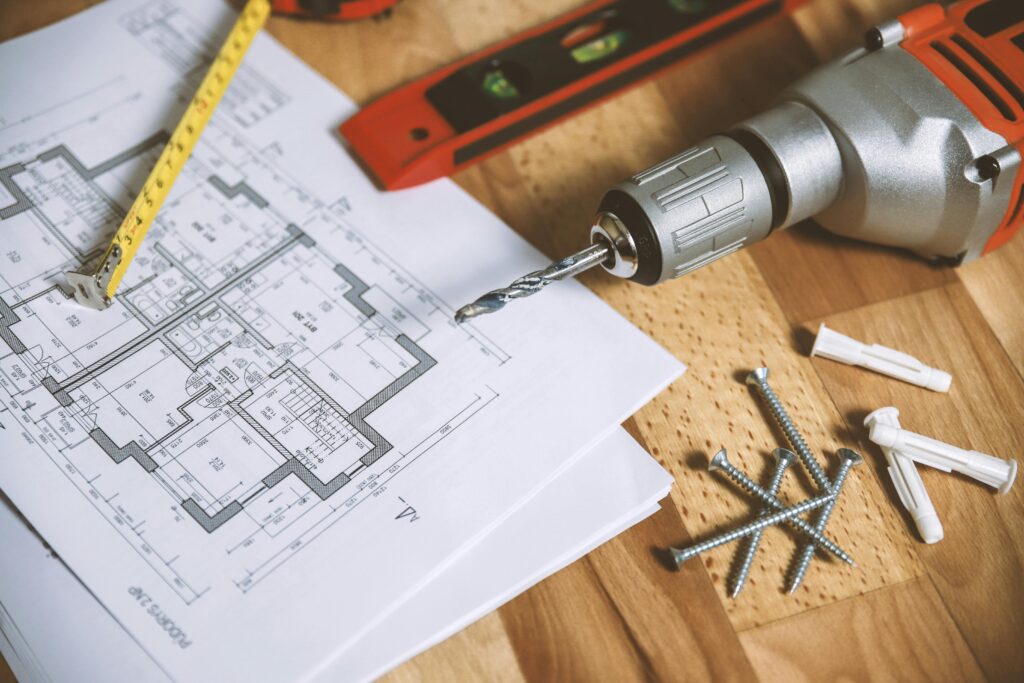
What you will need
A tape measure
Pen and paper.
Calculator (or our free online calculators)
Straight edge if the room has awkward shapes
Step 1- Measure the Room length
Stand at one end of the room and measure straight across to the opposite wall.
Record the full distance in metres (not feet). Always measure at the longest possible point, especially in older homes with uneven walls.
Example: Room length = 4.2m
Step 2- Measure the Room width
Now measure the width from wall to wall at the widest point. Again, record this in metres.
Example: Room width = 3.6m.
Step 3- Calculate the Floor area to find the total square metres
Multiply: Room length × Room width = Total area (m²) Using the example above:4.2m × 3.6m = 15.12m². This is the basic area used to calculate how much carpet, tiles, planks or plywood you need.
Step 4- Measuring Irregular-Shaped Rooms
If your room is L-shaped or has alcoves:
1. Split the room into two or more rectangles.
2 Measure each section separately.
3 Calculate each area.
4 Add the areas together.
This method is far more accurate than trying to measure the whole room in one go.
If you are measuring an L shape hall for example for carpet, just measure straight the widest points and treat it like a rectangle, there would need to be some waste removed in this instance.
For any plank or tile flooring the area can be calculated as written in STEP 4.
Step 5- Allow for Waste
All flooring installations require extra material for: Cuts. Doorways.
Waste.
Pattern matching.
Recommended waste allowance: Carpet: 5–10%
Tiles: 10–15%
Plank flooring: 10%
Plywood: 10%
Our calculators already include this automatically where needed.
Step 6- Use the correct calculator
Once you have your room measurements, use the correct tool for your project:
For soft flooring: Carpet Calculator.
For ceramic or porcelain: Tile Calculator.
For glue down LVT: Glue down LVT calculator
For laminate use the laminate flooring calculator:
For subfloors: Plywood Calculator.
For full project pricing: Labour Cost estimator.
For decorating: Paint Calculator.
For click LVT: Click LVT calculator
For stairs, halls and landings: stair carpet cutting plan generator
Each calculator uses real-world UK coverage rates for accurate results.

Should you measure or let a tradesperson measure?
If you are ordering materials yourself, always double-check your measurements. Many tradespeople will re-measure on site before fitting, but incorrect customer measurements can still lead to delays and extra cost.
Final tip
Measure twice, Order once. Flooring materials are expensive and often non-returnable. Ten extra minutes measuring can save hundreds of pounds later.
Try Our free calculators
Stair Carpet cutting plan generator
Explore Our Free Flooring & DIY Guides
Understand how to calculate tile quantities, plan layouts, and avoid wastage with a clear step-by-step guide.
How to calculate tiles without wasting money
Not sure how to measure your staircase? Our easy stair-measuring guide shows you exactly what to do.
How to measure stairs for carpet
Wondering in you need a plywood subfloor? Our guide tells you everything you need to know.