Whether you need a plywood subfloor depends on what flooring you’re fitting, what’s underneath, and how flat and stable the existing floor is. In some cases plywood is essential, in others it’s optional, and sometimes it’s completely unnecessary.
This guide answers do i need a plywood subfloor, when it isn’t needed, and when it’s simply the better option, based on real-world fitting practice.
What is a plywood subfloor?
A plywood subfloor is a layer of WBP or exterior-grade plywood fixed over an existing timber floor to create a flat, stable, and smooth surface before fitting flooring.
It is commonly used over:
Floorboards
Chipboard
Old or uneven timber subfloors
Plywood is not usually fitted over concrete floors.
When do you need a plywood subfloor?

1. Glue-down flooring (very common)
Plywood is often essential when fitting:
Glue-down LVT (dryback)
Vinyl sheet flooring
Some parquet or engineered wood systems
These floors rely on:
A smooth surface
No movement
No gaps or joints showing through
Floorboards or chipboard alone are rarely suitable for glue-down finishes.
2. Uneven or moving timber floors
If your existing floor has:
Gaps between boards
Minor height differences
Squeaks or flex
Plywood helps:
Tie everything together
Reduce movement
Prevent future issues showing through the finished floor
3. Herringbone and detailed layouts
Herringbone LVT or wood floors are far less forgiving than straight plank layouts.
Even small imperfections in the subfloor can become visible, so plywood is often the safer option.
When you dont need a plywood subfloor?
1. Floating floors with underlay
You usually don’t need plywood for:
Laminate flooring
Click LVT
Some engineered wood floors
As long as:
The subfloor is reasonably flat
An appropriate underlay is used
Minor imperfections are taken up by the underlay.
2. Solid concrete floors
Concrete floors are usually prepared with:
Smoothing compound (latex)
Damp proof membrane (if needed)
Plywood is not normally used on concrete floors.
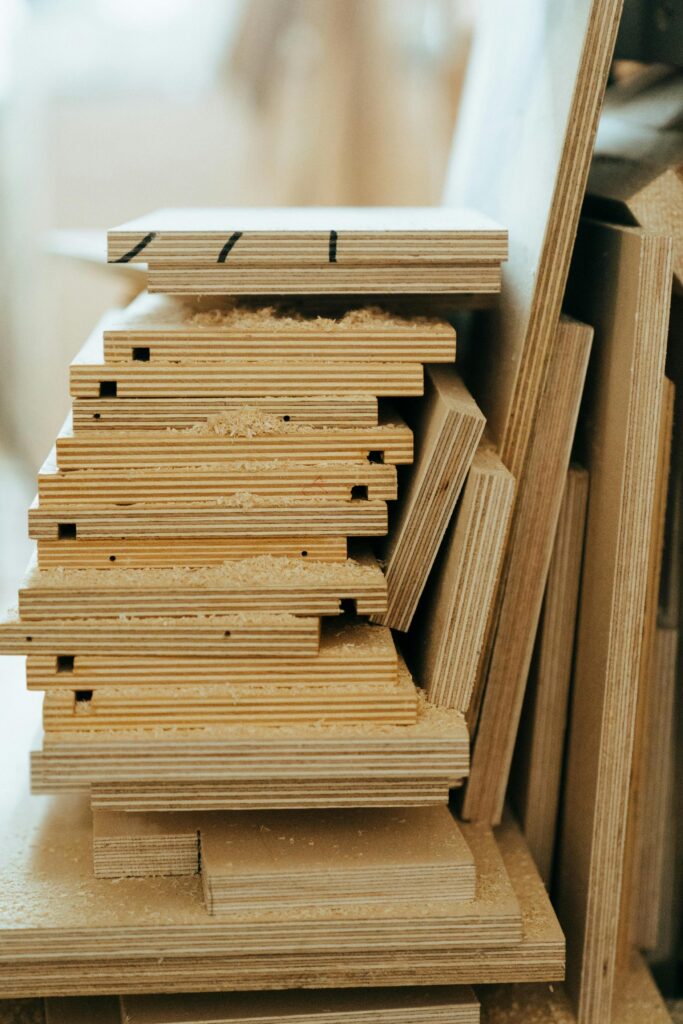
When plywood is essential- but is preferable
There are situations where plywood isn’t strictly required, but still makes sense.
Examples:
Older timber floors that are “mostly OK”
When fitting thinner flooring
When aiming for the best possible finish
When future floor changes are likely
Plywood adds:
Extra stability
A more predictable surface
Fewer problems later on
It’s often a case of spending a bit more now to avoid issues later.
6mm vs 9mm vs 12mm plywood-what’s the difference?
6mm plywood
Most commonly used for flooring prep
Suitable for reasonably sound floors
Less impact on floor height
Must be fixed correctly and closely spaced
Most common choice for LVT and vinyl.
9mm plywood
Better for floors with slight movement
Adds more stiffness
Good compromise between strength and height
Often used where the existing floor isn’t perfect.
12mm plywood
Used for very uneven or weak floors
Adds significant height
Not usually necessary for modern flooring
Typically reserved for problem floors or major refurbishments.
Should you DIY a plywood subfloor?
Plywood fitting looks simple but does require care.
DIY is possible if:
You’re confident with tools
You understand fixing patterns
You stagger joints correctly
You avoid fixing into pipes or cables
Common DIY mistakes include:
Using the wrong type of plywood
Not fixing it often enough
Leaving gaps or raised joints
Not allowing for movement
If the finished floor is expensive (especially glue-down), professional prep is often worth it.
Final thoughts
A plywood subfloor isn’t always necessary — but when it is needed, skipping it can cause long-term problems that are hard to fix later.If you’re unsure, ask:
What flooring am I fitting?
How flat and solid is the existing floor?
How visible would imperfections be?
When in doubt, good subfloor preparation is rarely money wasted.
For further technical guidance on plywood grades, thicknesses, and correct use in flooring applications, organisations such as TRADA (Timber Research and Development Association) provide independent research and industry standards. Their guidance helps ensure plywood subfloors are suitable, durable, and installed in line with best practice.
https://trada.co.uk/start-here/flooring/
Related tools
Stair Carpet cutting plan generator
Explore our free flooring and DIY guides
How to measure stairs for carpet